Life list, year list, patch list: what’s the difference and which should you keep?
Spend any time around birders and you’ll hear things like “that’s a year tick”, “I’m on 152 for the patch” or “three more for 300 on my life list”. It can sound like a secret language, but it isn’t. These are just different ways of keeping track of the birds you’ve seen, and each one gives you a different reason to get outside. Here’s what each list means, what it’s good for, and how to choose.
The life list
What it is: every species you’ve ever seen, anywhere, since you started. Each new species on it is called a life tick (or a “lifer”).
Why keep one: it’s the record of your birding life. It only ever goes up, and every number is a memory: your first Kingfisher, the Osprey on holiday, the Waxwings in the supermarket car park.
Good for: everyone. Even if you never keep another list, a life list is worth having. It’s also the list that brings up milestones like your first 50, 100 or 200 species.
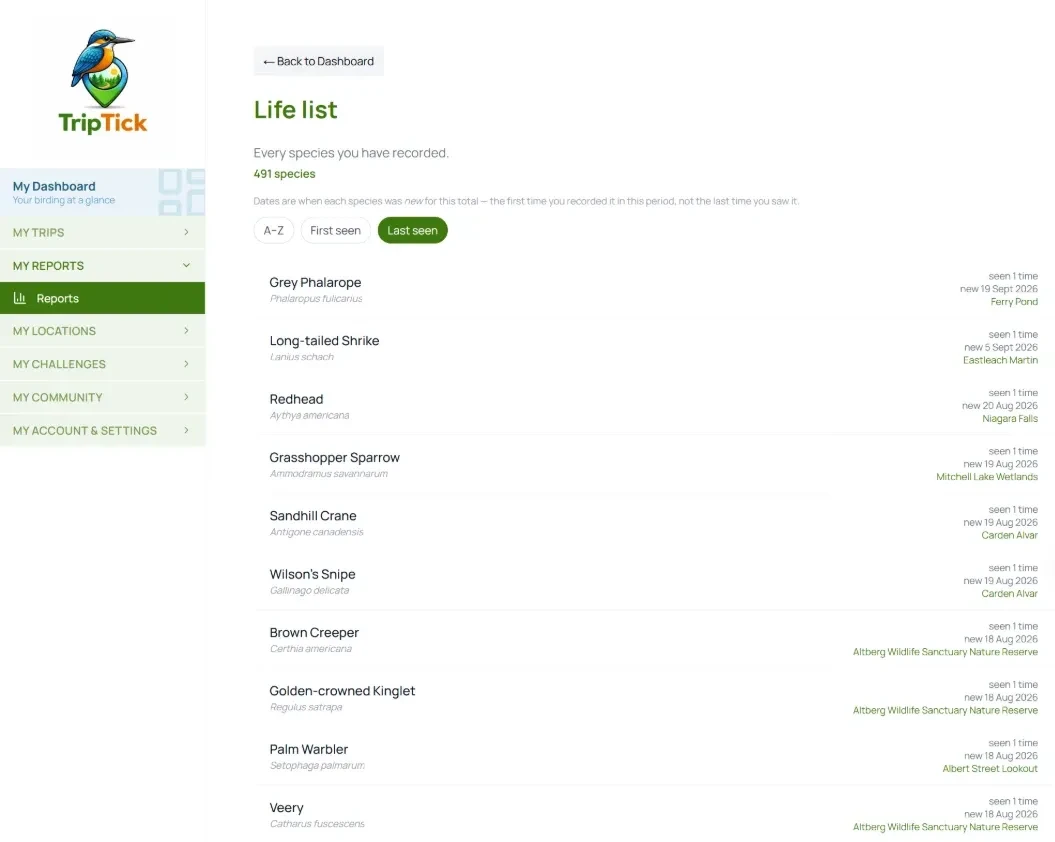
Watch out for: after the first couple of years, life ticks get rarer, especially if you mostly bird close to home. That’s where the other lists come in. (For more on this one, read our guide to keeping a birding life list.)
The year list
What it is: every species you’ve seen since 1 January. On New Year’s Day it goes back to zero and the race starts again. A new species for the year is a year tick.
Why keep one: it puts the fun back into common birds. You may have seen hundreds of Robins in your life, but your first one of the year still counts. Many birders spend New Year’s Day dashing about trying to see as many species as possible.
Good for: keeping you motivated all year. It’s also a nice way to compare years: were you out more this year than last? Did you finally catch up with the Spotted Flycatchers?
A variation: some people take it further with a “Big Year”, a serious attempt to see as many species as possible in one year in a county or country.
The patch list
What it is: every species you’ve seen at your local patch, one place you visit regularly. That might be a park, a stretch of river, a reservoir, a headland or just the fields at the end of your road.
Why keep one: patch birding is where a lot of birders find the most enjoyment. When you visit the same place again and again, you start to notice the details: when the first Chiffchaff sings in spring, when the winter thrushes arrive, which bush the Bullfinches like. And when something unusual turns up, you’re the one who finds it.
The rules are up to you, but a common one is that anything you see or hear from inside your patch counts, including birds flying over.
Good for: anyone who likes routine, local walks or a bit of friendly rivalry. A patch list can be exciting even after years of birding, because a new patch tick is never guaranteed. Our patch listing guide for beginners covers how to choose one.
Other lists birders keep
- Garden list: everything seen from (or over) your garden. It’s a great way to start, and it’s surprising how many species fly over if you keep looking up.
- Trip list: everything seen on one holiday or outing.
- Day list: everything seen in a single day. It’s satisfying to try to beat your best.
- County or country list: everything seen in one area, e.g. your Sussex list or your UK list.
So which should you keep?
If you’re just starting, keep it simple:
- Start with a life list. It’s the foundation, and every sighting counts.
- Add a year list from 1 January. It’s the easiest way to keep enjoying common birds.
- Pick a patch once you’ve found a place you love. Choose somewhere close, as you’ll go more often.
There’s no wrong answer, and nobody’s checking. Some birders keep a dozen lists, while others don’t count at all and just enjoy watching. Keep the lists that make birding more fun for you.
The easy way: keep them all at once
Keeping several lists in a notebook gets fiddly fast. When you see a Redwing in January at your local reservoir, does it go on your life list, your year list, your patch list or your county list? It might go on all of them.
That’s what Trip Tick does for you. You record each sighting once (with or without phone signal) and the app keeps your lists up to date automatically:
- Life and year lists: Trip Tick spots your life ticks and year ticks as you record them, and your dashboard shows your life total and this year’s total at a glance. Your life list also earns badges as you reach new milestones.
- Patch and site lists: every location you add gets its own species list, showing every bird recorded there with when you first and last saw it. A single-site patch needs nothing more — see how to add a location or patch.
- Patches across several sites: with Premium, tags let you group locations into one patch, such as “Local patch” or “Sussex”, and show that total on your dashboard next to your life list. You can even set a patch challenge like “100 species at my patch this year” and watch the bar fill up.
- Heard-only birds: you decide whether birds you only heard count towards your totals, and Trip Tick recalculates everything to match.
Recording is free forever, so you can start building your lists today. If you have years of old notebook records or an eBird account, you can import your existing life list too, and see it appear in one go.
Start free →