How Trip Tick keeps its species list up to date
Bird taxonomy isn’t static — species get split, merged and renamed as research improves. Here’s how Trip Tick keeps pace with that, and what it means for your list.
The problem with taxonomy
For years, birders have had to juggle slightly different species lists depending on which authority or app they used — a frustrating patchwork when you’re trying to keep one consistent life list. A split or lump in one source but not another can leave your total looking different depending on where you check it.
Why we use AviList
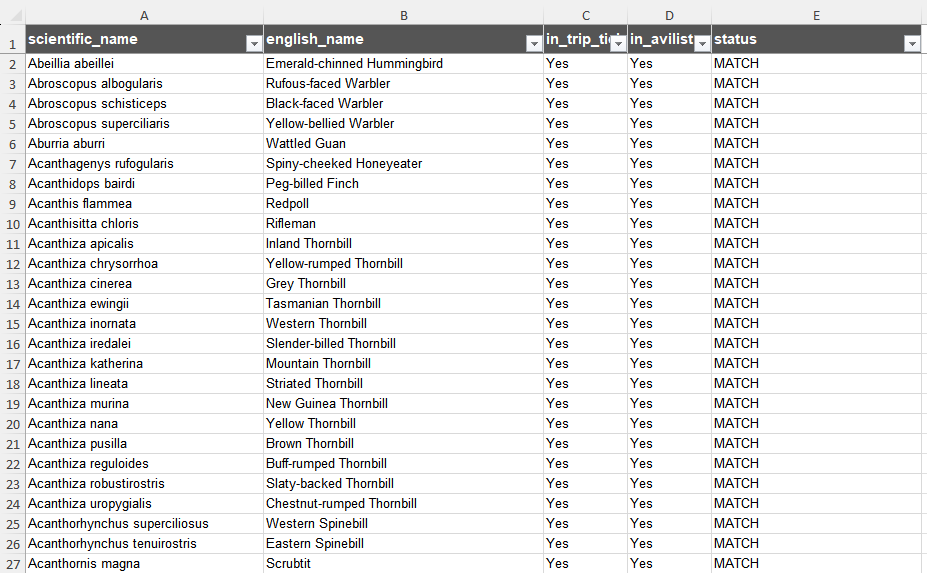
Trip Tick’s species names, and the order we list them in, follow AviList — a unified global checklist bringing the world’s major taxonomic authorities together into one agreed standard. It’s designed to be the single reference the whole birding world can work from, rather than one more competing list.
How often it updates
AviList releases an updated checklist once a year, and Trip Tick syncs to it on the same schedule. When a species is split, merged or renamed, we update our list to match — so your records stay aligned with the current global standard without you having to do anything.
What it means for your list
Occasionally a taxonomic change will affect an entry already on your life list — a split, for instance, might turn one entry into two possibilities depending on which population you saw. We’ll always aim to handle these sensibly and flag anything that needs your input, rather than silently changing your totals.
Consistency you can rely on
The goal is simple: whether you’re birding at home or abroad, your Trip Tick list reflects the same names and order as the rest of the birding world — not a version that’s quietly drifted out of step.